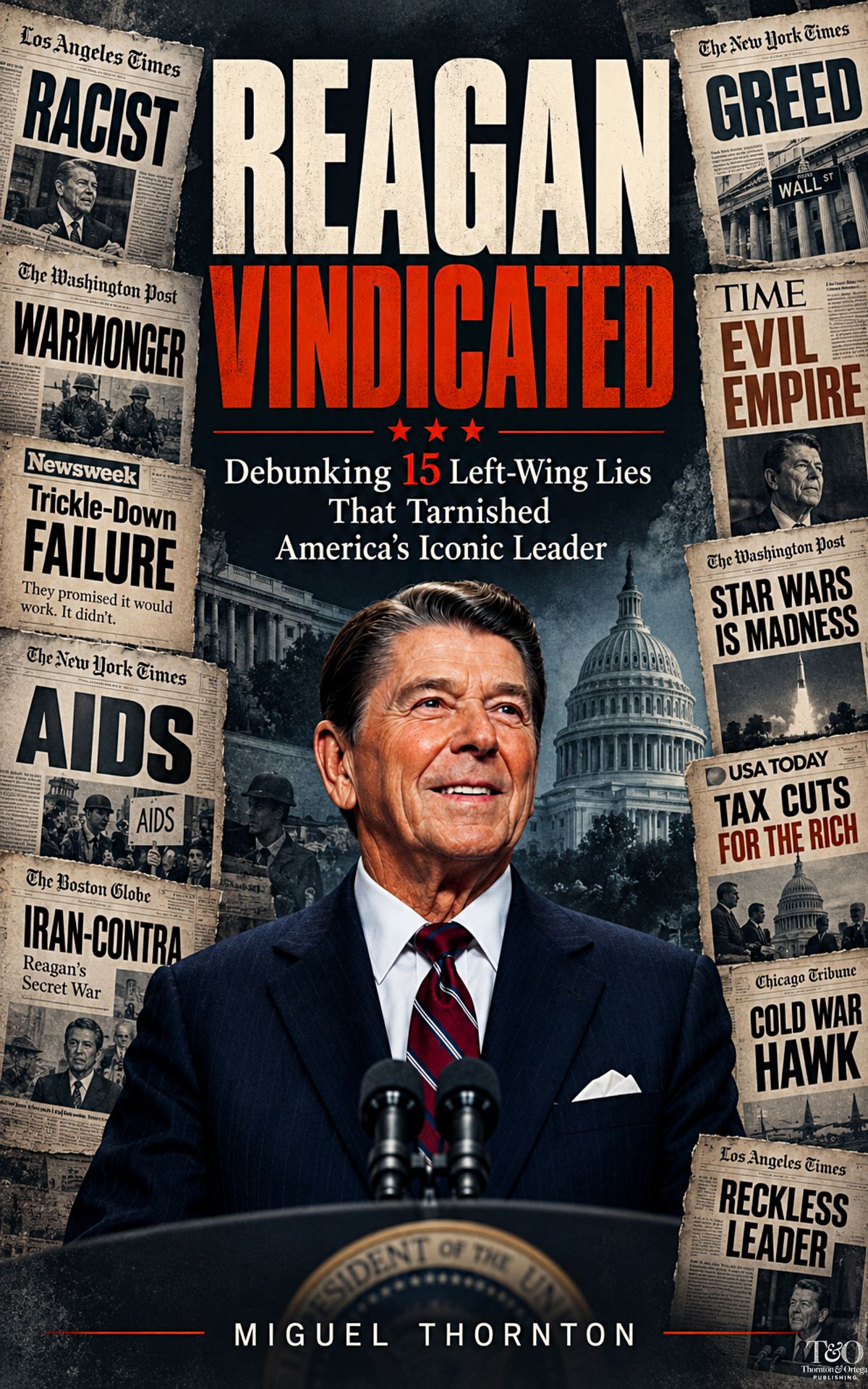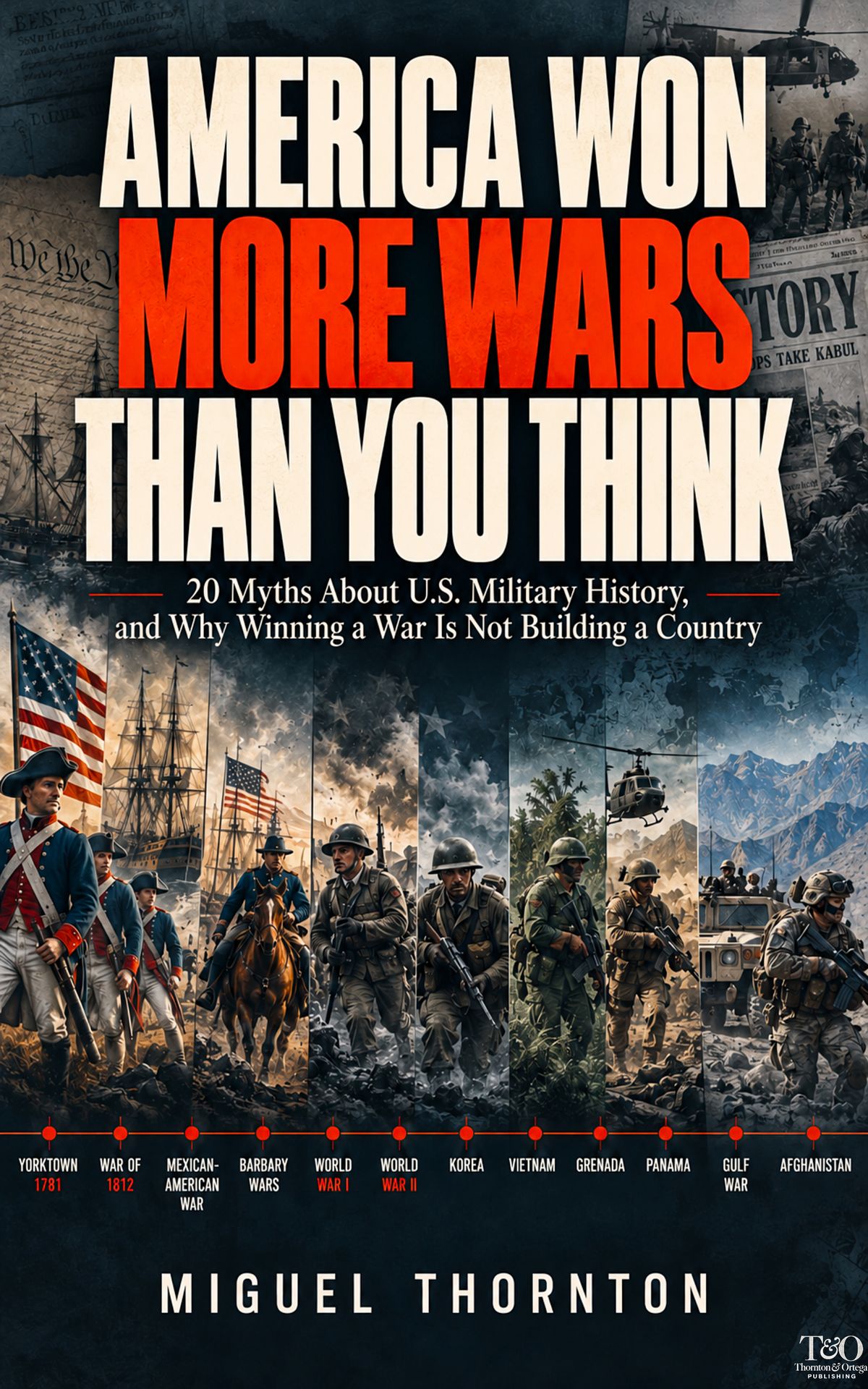
America Won More Wars Than You Think
20 myths about U.S. military history, and why winning a war is not building a country
20 chapters · 130 pages · EPUB & PDF
$6.99
EPUB + PDF · instant download
- Secure payment by Stripe
- Instant download
- 14-day refund before download
EPUB + PDF · works on any device · no DRM
Paperback · only on Amazon (opens in a new tab)About this book
Most Americans have heard that their country stopped winning wars after 1945. The book tests that claim against treaty terms, casualty figures and the memoirs of the men who lost, and makes the case that it folds two separate questions into one.
Breaking a regime and building a country afterward are different jobs. After reading, you will be able to score each one separately: what the objective was, who set it, when the result was supposed to be counted, and what the same standard says about anyone else’s war.
Applied that way, the record looks different. Kabul fell in about two months, Baghdad in about three weeks, and Kuwait was freed in a hundred hours. NATO’s 78-day air campaign over Kosovo brought roughly a million refugees home without a single American combat death. France won in Algeria on the ground and lost in Paris anyway. The failures are real, and the book dates them: two orders signed by the American occupation authority in Baghdad in May 2003, overturning prewar advice.
You come away able to hear a confident one-line verdict on any war and see which of the two jobs it is actually about.
Questions about this book
Does the book cover wars before 1945, or only recent ones?
Yes. Fifteen chapters take the wars one at a time, from Yorktown in 1781 to Kabul, including the War of 1812, the Mexican-American War and the Barbary Wars. Five more ask cross-cutting questions, such as whether these wars are fought for profit.
Does the book only defend the U.S., or does it cover American mistakes and war crimes?
No. It covers My Lai, Abu Ghraib, No Gun Ri and El Chorrillo, and each chapter states the strongest objection to its own argument, in its best form, before answering it.
What kind of sources does the book rely on?
Cabinet minutes, procurement records and captured files. Each chapter ends with a plain-line source list that includes scholars not friendly to its argument, such as Bruce Cumings on Korea and Tsuyoshi Hasegawa on Japan’s surrender.
Reader reviews
No reviews yet.